Strength in Numbers: GHMA Unites Houston Manufacturers
A regional field report on Houston manufacturers diversifying into aerospace, shipbuilding, electronics, and biomanufacturing while adapting procurement and power-risk strategies.
Bipartisan push possible to curb Trump tariffs
A practical guide to three congressional bills that could restrict presidential tariff authority and the supply-chain steps manufacturers can take while policy remains unsettled.
Singulus signs SpaceX deal for heterojunction solar cell line
The report traces SpaceX's contract for a turnkey HJT cell line, the planned Texas satellite-manufacturing use case, and the uncertainty around an unusually large stated equipment-capacity target.
Heliene announces commercial production of perovskite tandem modules using Caelux glass
A technical report on the start of commercial-scale tandem-module production in Minnesota, the domestic California glass supply, and the companies' efficiency and shipment roadmap.
Analysts weigh renewable energy permitting, tax credit odds after Democratic sweep
Policy and tax specialists examine the outlook for Section 45X manufacturing credits, foreign-entity supply-chain rules, grid-equipment restrictions, and permitting reform after the midterms.
Two Years On: How the Second Trump Administration Has Rewired the Relationship Between Acquisition and the Defense Industrial Base
A detailed assessment of how multiyear demand signals, fixed-price contracting, direct investment, supplier visibility, and congressional appropriations are reshaping the Pentagon-industry bargain.
DLA commits $2 billion to critical materials as Anniston expands defense industrial role
A North Alabama report connects the National Defense Stockpile’s domestic-sourcing push with graphite processing, material recovery, and a major depot-modernization program at Anniston.
The AI Build-Out Enters the Fed’s Inflation Case
A data-heavy look at how the AI infrastructure boom is reshaping U.S. prices for storage devices, circuit boards, semiconductors, computers, and power equipment.
Mobilizing for Techno-Economic War, Part 9: Finding the Political Will to Transform America's Economic System
ITIF argues for a national economic framework that prioritizes advanced traded industries, industrial capability, and technology leadership. The report concludes a multipart series on U.S. techno-economic competition and industrial strategy.
AI Ambitions Are Outpacing Manufacturing's Factory Networks
Manufacturers Alliance Foundation reports that shop-floor connectivity and IT/OT coordination are limiting manufacturers' ability to scale AI and automation. The findings draw on a survey of 130 leaders at U.S. mid- to large-cap manufacturers.
A Data-Center-Friendly Tax Credit May Become a Target in 2027
The Business Journals examines how the 2026 midterm results could change federal tax treatment for data-center capital investment. The policy debate bears on the infrastructure buildout competing with and supporting new U.S. industrial capacity.
Tutor Perini's $200 billion bid pipeline points beyond data centers
The contractor's U.S. outlook centers on transportation, bridges, transit, federal buildings, and military facilities as infrastructure-funding decisions move back to Congress.
Aging-grid replacement is sustaining WSP's U.S. infrastructure backlog
Transmission, substation, and power-system modernization demand remains strong even as project authorizations slow and the data-center boom faces public resistance.
Duke Energy's large-load pipeline drives a $103 billion grid buildout
The utility is holding to 16 GW of planned generation and storage as data-center and industrial demand tests how quickly new capacity can be built and paid for.
U.S. manufacturing added 19,000 jobs in October
Electronics, machinery, transportation equipment, and primary metals led the gains, while September openings rose sharply from a year earlier.
Zipline's $1.5 billion raise backs a U.S. drone-manufacturing expansion
The delivery-drone company plans to expand domestic manufacturing and hiring as Walmart adds 300 service sites and Uber targets a much larger network.
Century Aluminum's Oklahoma smelter faces a financing-and-permitting test
The proposed $4 billion project could double U.S. primary-aluminum output, but a local moratorium, tribal opposition, and unresolved power and financing talks cloud its timetable.
Aurora's autonomous-truck ramp exposes component and quality bottlenecks
The company and Roush are six weeks behind schedule as they move to volume builds, replace a wire-harness supplier, and target 20 trucks a week.
Pfizer and Hydro add new manufacturing projects in Connecticut and Pennsylvania
A planned $650 million clinical-manufacturing center and a $53.5 million extrusion-line groundbreaking show investment continuing across pharma and metals.
Lear's Orion seat plant is a blueprint for factory-wide automation
The Michigan site links storage, intralogistics, mobile robots, inspection, and workforce scheduling into a production model Lear plans to scale across other programs.
Solar developers rewrite procurement contracts ahead of a Section 232 deadline
pv magazine USA examines how higher inventories, overlapping trade rules, and uncertain post-December pricing are changing utility-scale contracting and project economics.
Pentagon financing could double LeoLabs' radar-manufacturing expansion
A conditional $150 million Office of Strategic Capital loan, matched by private investment, would support two U.S. manufacturing facilities and a larger space-tracking radar network.
U.S. Steel's improving profits are underpinning a $6.7 billion investment program
Manufacturing Dive connects the steelmaker's quarter-over-quarter profit gain with approved U.S. upgrades, including projects in Pennsylvania, Indiana, and Arkansas.
Shield AI's Echodyne acquisition brings radar manufacturing in-house
The planned $5.3 billion deal would add Echodyne's counter-drone sensors, radar engineering, manufacturing capacity, and commercial customer base to Shield AI's defense portfolio.
Steel frames offer a scalable domestic-content path for U.S. solar modules
A pv magazine USA analysis explains how compact roll-forming plants, greater frame stiffness, and tax-credit rules could expand domestic solar-component manufacturing.
Hyper-local supply chains are shortening the path from solar project to power
Silicon Ranch's develop-to-own model pairs community commitments with domestic sourcing, including a Tennessee project that procured most site materials within 500 miles.
North Carolina cable maker scales for the data-center power buildout
Gaon Cable's U.S. subsidiary is adding production lines in Tarboro while moving from data-center distribution equipment toward transmission and potential nuclear-power applications.
Massachusetts connects factory grants, workforce training, and defense investment
On-the-ground reporting from the state's Manufacturing Mash-Up shows how commercialization grants, broader skills programs, and matching capital aim to reinforce a 6,000-company industrial base.
Army ammunition plants face a production-versus-safety reckoning
An investigation traces pollution, safety violations, and aging infrastructure across the government-owned plants now being pushed to replenish depleted U.S. munitions stocks.
Unclear Army demand is holding back unmanned-vehicle production
A ground-autonomy consortium executive explains why demonstrations without defined missions, contract paths, or follow-on orders leave manufacturers unsure where to invest.
AI demand is testing the limits of U.S. factory capacity
Two October manufacturing surveys show stronger output and hiring alongside longer lead times, rising input prices, and acute demand for semiconductor and defense equipment.
Oshkosh brings truck-scale manufacturing to Grid Aero's Lifter drone
The Wisconsin defense manufacturer and the aircraft startup are redesigning the Lifter around parts, processes, and supply chains that can support hundreds or thousands of autonomous aircraft.
Battery-first energy is changing how grid capacity gets built
Jigar Shah argues that virtual power plants and distributed batteries can relieve constrained feeders, broaden storage financing, and connect new U.S. loads faster.
Plug-in solar is forcing U.S. utilities and regulators to catch up
A panel of installers and manufacturers maps the safety standards, state laws, interconnection rules, and service models shaping a fast-emerging distributed-energy market.
Lithium-ion bankability may be crowding out long-duration storage
Sandia and PNNL analysts explain why financiers keep steering U.S. grid storage toward four-hour batteries even as industrial load growth raises the value of multi-day technologies.
Arkansas connects the Army's arsenal, commercial logistics, and advanced materials
An Army field report traces how Pine Bluff's munitions lines, Walmart's logistics systems, and University of Arkansas semiconductor and construction research fit into a whole-of-nation industrial base.
El Niño will stress-test America's transformed power grid
Axios maps how a much larger fleet of batteries, solar, wind, and regional transmission could absorb—or amplify—winter supply shocks across the U.S. grid.
Governor races could reshape the data-center construction pipeline
Axios maps how state elections may affect 67.4 gigawatts and $2.5 trillion of planned U.S. AI infrastructure investment.
The AI buildout may be crowding out factory construction
The Atlantic traces how data-center investment is bidding up capital, labor, land and materials while spending on manufacturing plants falls.
GM retools its Lansing plan around future hybrid production
A restructured $500 million federal grant will support factory preparation as the automaker broadens its U.S. manufacturing strategy.
How manufacturers can widen the factory talent pool for workers with disabilities
Timken and workforce experts explain practical accommodations, inclusive hiring and shop-floor return-to-work strategies.
North American robot orders jump nearly 25% in the third quarter
Semiconductor, biopharmaceutical and automotive investment made the quarter 2026's strongest for industrial-robot demand.

U.S. solar manufacturing crosses 100 GW—and enters the harder execution phase
Factory leaders say workforce, vertical integration, quality control, and durable margins now matter more than headline capacity announcements.

Budget uncertainty threatens the Army's first MV-75 production award
Textron says a continuing resolution could push low-rate production into 2027 and deepen the program's cost hit while suppliers keep building hardware.

Toyo's Texas solar buildout faces a supply-chain traceability test
Customs released detained Ethiopian cells, but a broader circumvention inquiry still hangs over imports feeding the company's U.S. module plant.

SEG Solar plans a vertically integrated Texas cell-and-module campus
The proposed $950 million HJT cell plant would place cells, modules, components, testing, R&D, and warehousing on one Houston-area site.

Clean-energy manufacturing growth is splitting between scale and strain
Corning, Tesla, Nextpower, and Enphase show how utility-scale demand, factory ramps, and policy exposure are producing sharply different outcomes.

New York's STAMP industrial park lands its first operating factory
Edwards Vacuum's $319 million dry-pump plant opens a semiconductor-supply-chain foothold at a long-delayed industrial site shaped by public incentives and environmental disputes.

GE Vernova's Trench deal targets a U.S. grid-equipment bottleneck
A planned $9 billion acquisition would bring a key high-voltage supplier in-house as a new Charlotte factory prepares to scale bushing output from 3,500 units toward 10,000.
Anduril and Qualcomm take a phased path toward U.S.-built computers
BlueChip laptops will start with Ohio circuit-board assembly and Arizona-made processors while the partners work to localize enclosures, battery components, and other hardware.

Anduril's new manufacturing campus cannot wait for the grid
A 25-megawatt bridge-power system will pair utility service with 60 megawatt-hours of batteries so a six-building California factory complex can open before permanent upgrades arrive.

The Navy's deployment surge is becoming a shipyard-capacity crisis
Hundreds of returning maintenance availabilities could overwhelm private and public yards, forcing years of sequencing, deferred repairs, and modernization tradeoffs.

A mid-scale biomanufacturing plant could fill the Pentagon's specialty-chemical gap
Biosphere's planned 20,000-liter facility aims to make roughly 100 tons a year of hard-to-source materials ranging from landing-surface binders to missile energetics.
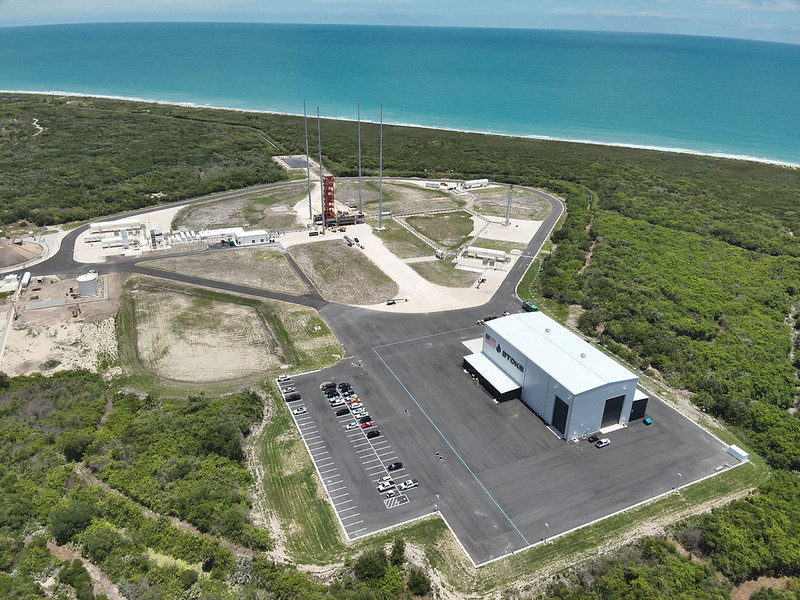
A $150 million Pentagon loan could expand U.S. launch capacity
Stoke Space's proposed second Cape Canaveral pad would support a growing national-security launch market as providers prepare for a possible bottleneck.

Boeing's defense rebound rests on new programs and fewer fixed-price bets
After years of losses, Boeing points to fighter wins, T-7 and MQ-25 production milestones, and contract discipline as the foundation for growth.

Army tests whether industry can build nearly 21,000 Infantry Squad Vehicles
A new market survey asks suppliers to price production from 100 to more than 1,500 vehicles a year as the service weighs procurement paths through fiscal 2036.

A Michigan auto supplier crosses into defense manufacturing
JVIS opens a standalone defense unit with a $13.2 million Army power-system contract, joining the state's push to turn automotive capacity into a new arsenal.

What the F-15 and F-22 teach about buying the F-47
A budget analysis argues that rushing sixth-generation fighter procurement could crowd out other priorities, while slow buying risks cost escalation and fleet shortfalls.

A new tanker design could strengthen Air Force reach and industrial capacity
A Hudson Institute study argues the Air Force should cap additional KC-46 purchases and begin fielding a longer-range blended-wing-body refueler by the early 2030s.
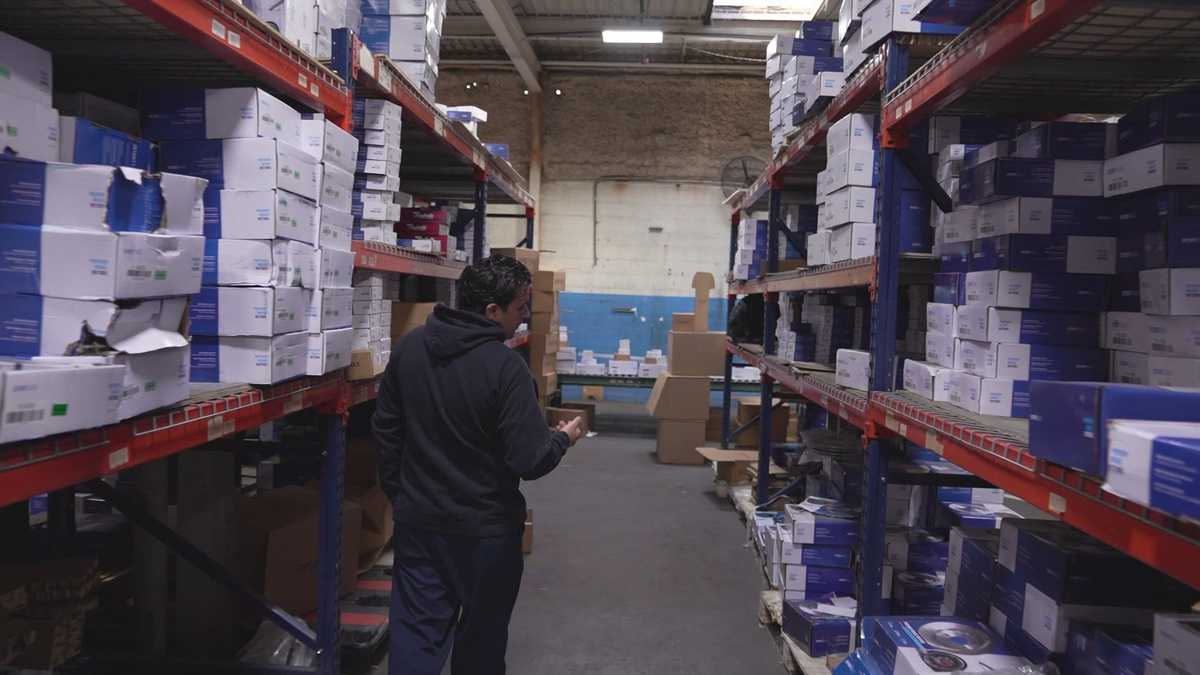
What the data says about Trump's manufacturing revival
Hearst's Washington data team finds factory employment roughly flat and inflation-adjusted manufacturing construction spending down despite prominent new plant announcements.